
Best Volcano Hikes in Hokkadio
Introduction
Japan is one of the world’s best destinations for volcano hiking. Located on the Pacific Ring of Fire, the country is home to more than 100 active volcanoes, creating dramatic landscapes of steaming fumaroles, crater lakes, lava domes and rugged mountain trails. Hokkaido, in particular, offers some of Japan’s most accessible and scenic volcano hikes, where you can experience these incredible landscapes while enjoying spectacular views and diverse alpine nature.
This guide showcases some of the best volcano hikes in Hokkaido.
Why hike volcanoes in Japan?
Hiking a volcano in Japan is about much more than reaching the summit. You’ll experience dramatic volcanic landscapes shaped by lava flows, steaming fumaroles and ancient craters, while enjoying sweeping views across mountains, forests and lakes. Many volcanoes are carefully monitored for volcanic activity, allowing hikers to explore them safely when trails are open. Depending on the season, alpine flowers add vibrant colour to the rugged terrain, and many of Hokkaido’s most beautiful lakes, including Lake Toya and Lake Shikotsu, were formed by past volcanic eruptions. Together, these unique features make volcano hiking one of the most memorable outdoor experiences in Japan.
Best Volcano Hikes in Hokkaido
Mt. Usu
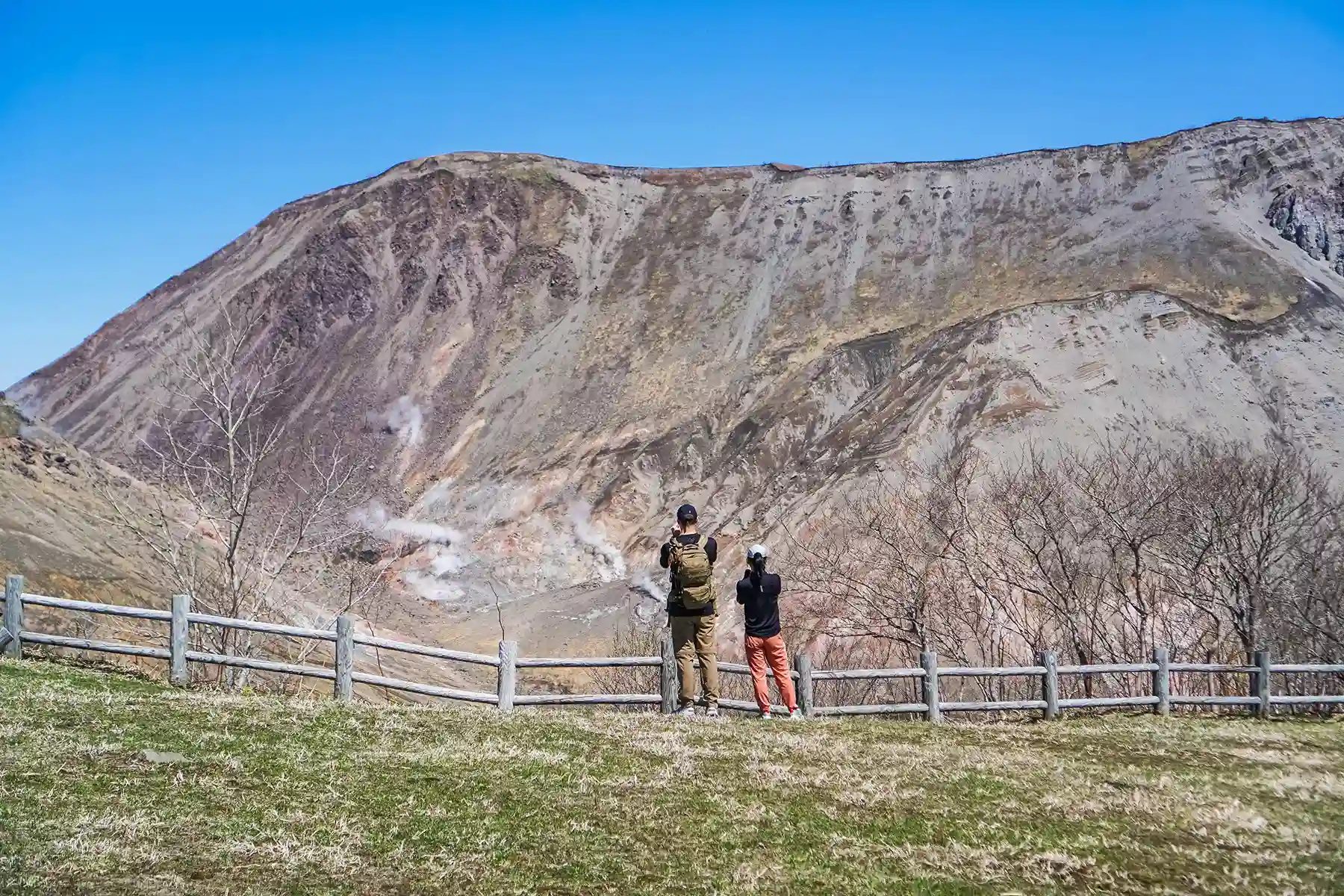
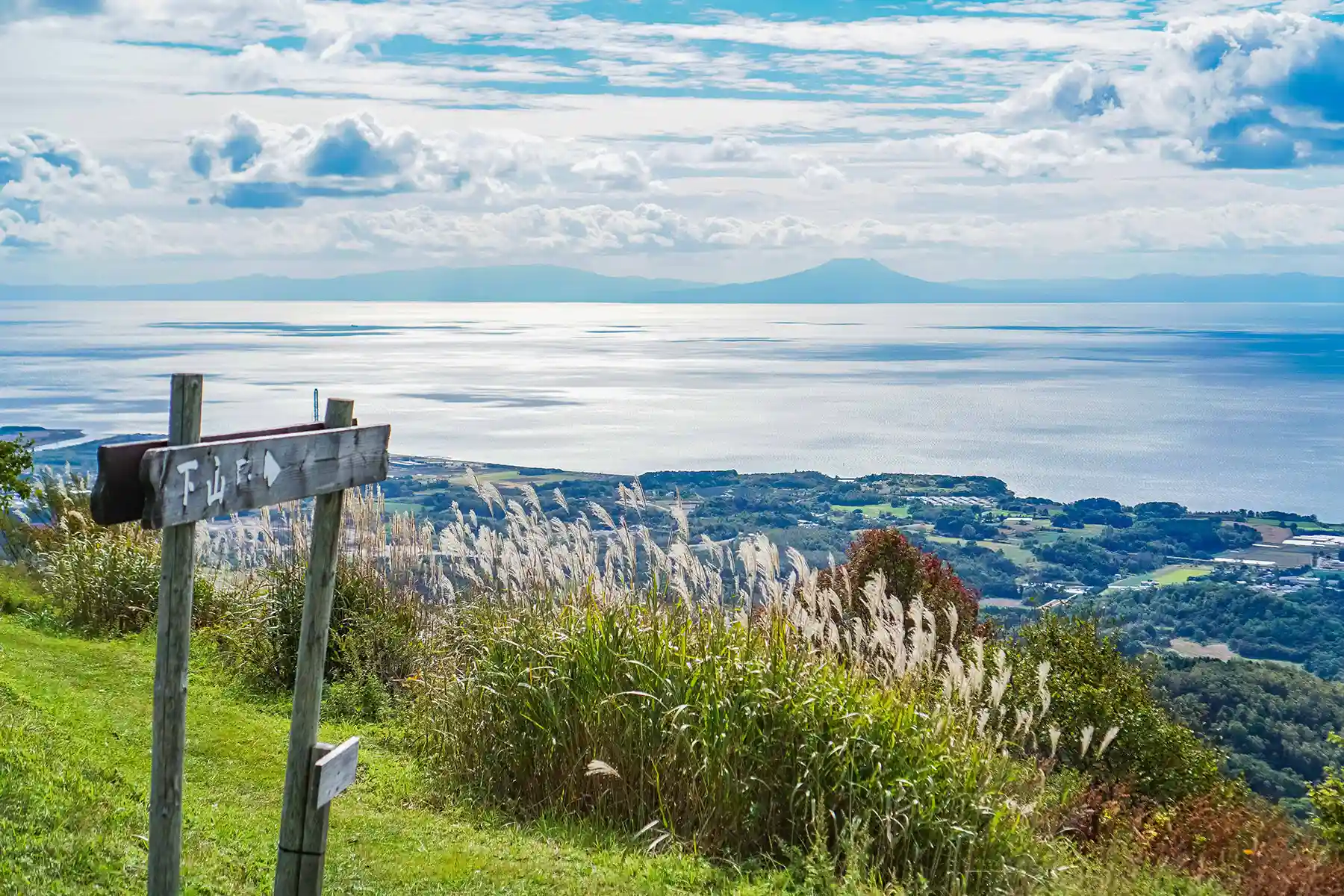
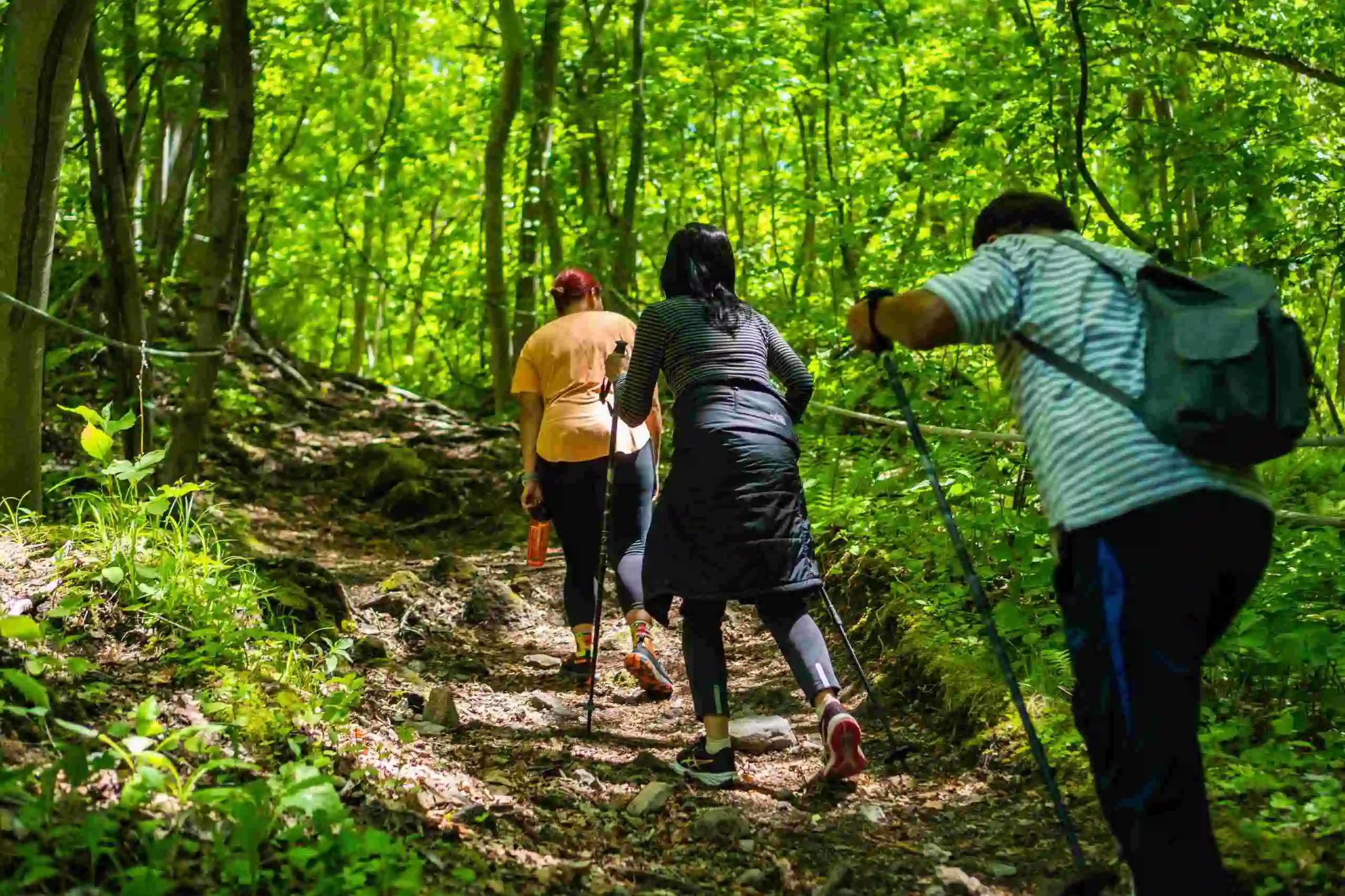
Formed around 20,000 years ago, Mt. Usu is one of Hokkaido’s most active volcanoes. Its frequent eruptions have created unique volcanic landscapes, including lava domes and a very wide crater.
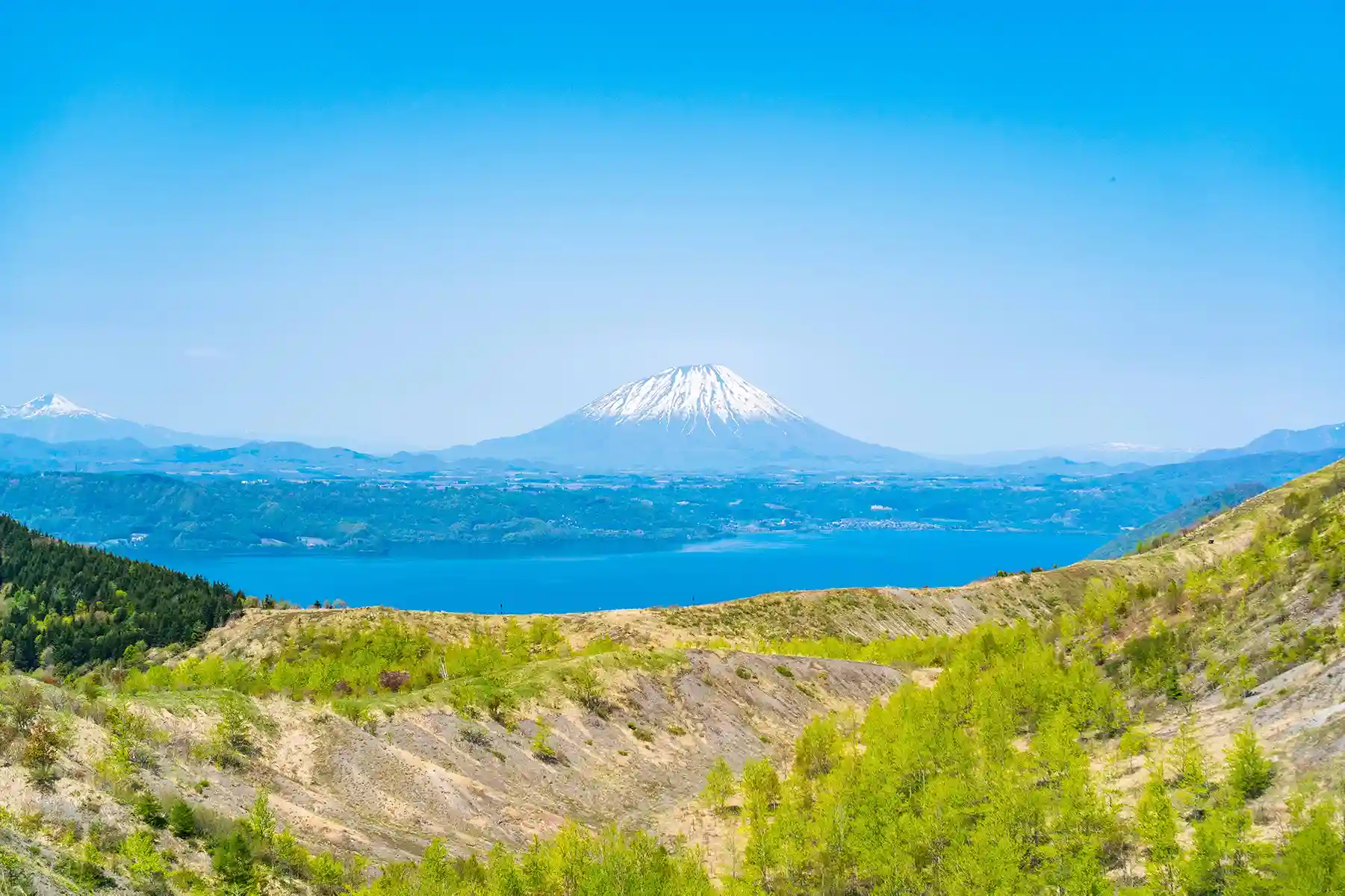
Most people take the ropeway up, but on the other side of the volcano there is a beautiful hike that climbs up through forests until the crater rim. The crater and the very peak of the volcano is out of bounds due to its volcanic activity. However, the crater rim offers magnificent views in all directions, including Volcano Bay, Lake Toya with Mt. Yotei in the distance and Mt. Usu itself. There are benches for so make sure to bring a packed lunch and take time to enjoy the views.
- Height: 510m
- Difficulty: Moderate
- Time: 3 hours
- Best season: Spring, Summer, Autumn
- Highlights: Fumaroles steaming in the crater, panoramic views
- Location: Shikotsu-Toya National Park (Google Maps)
Want to hike Mt. Usu with a local guide? → View our Mt. Usu Guided Hiking Tour
Mt. Tarumae
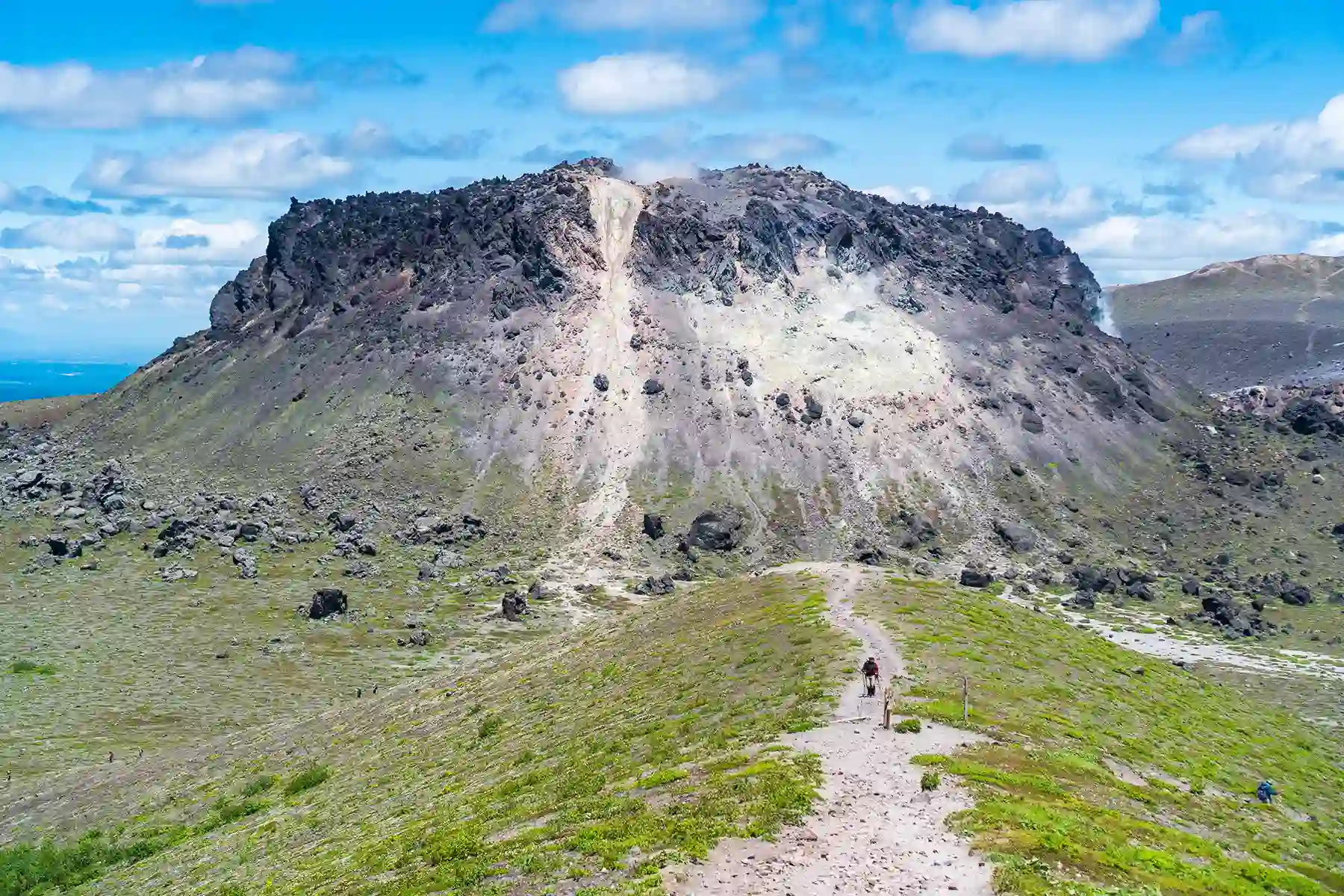
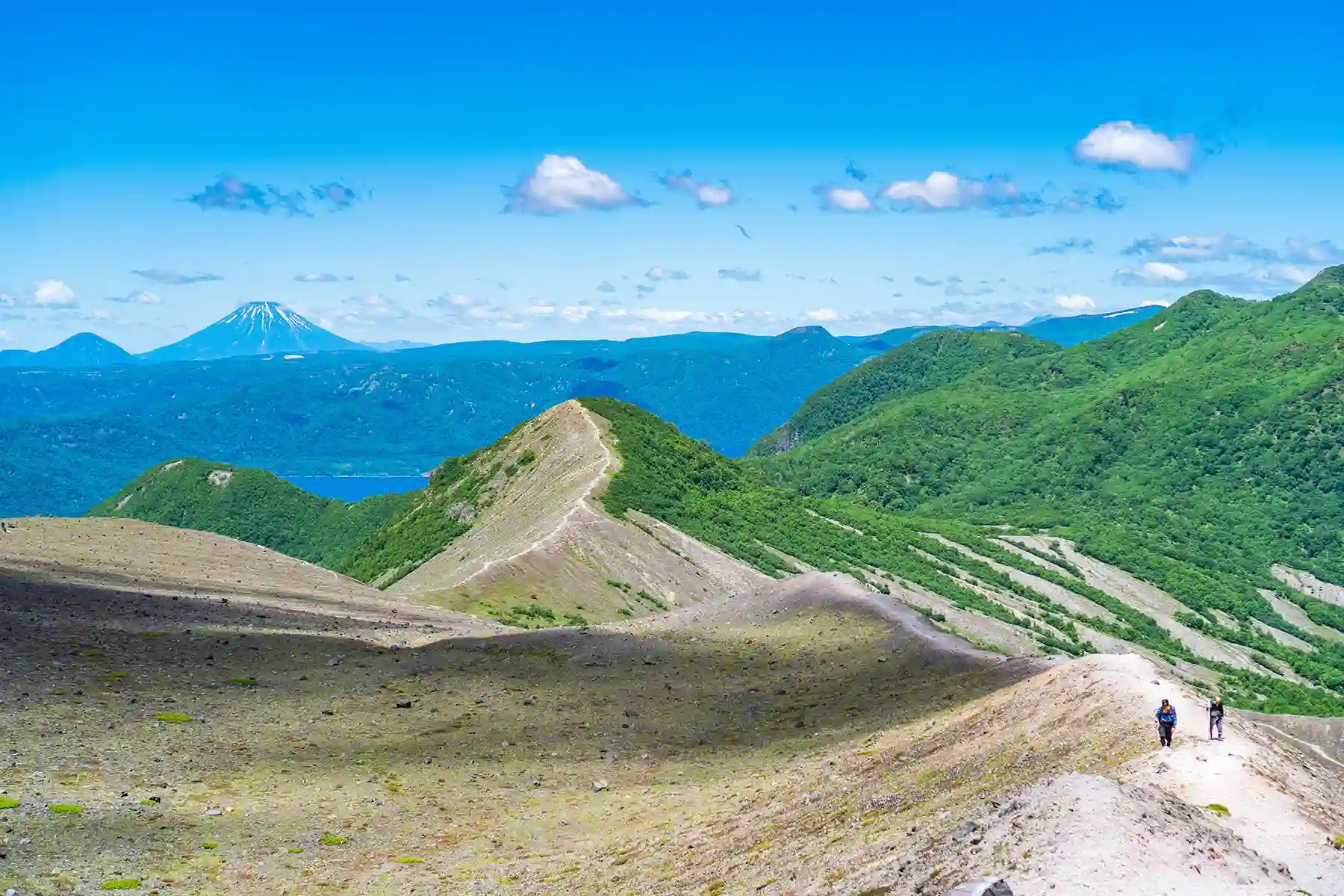
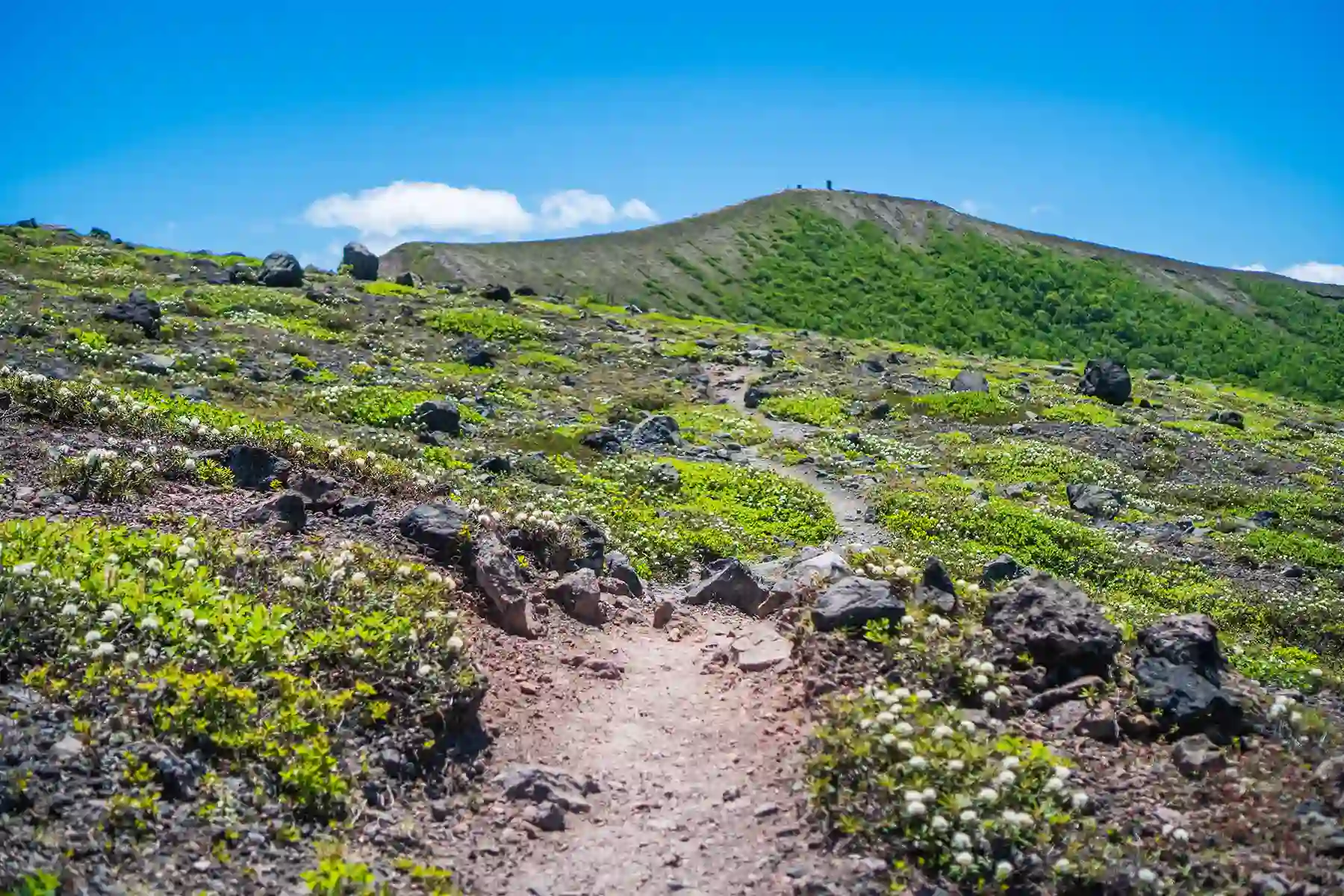
Mt. Tarumae is an active volcano located near Tomakomai city and Lake Shikotsu. It is a popular hike and for good reason. The volcano is only 1,022m high but has an out-of-this-world landscape, with a giant lava dome jutting out from the centre and huge boulders scattered around it from its previous eruptions.
Most people hike only to the summit, which is a fairly easy 1 hour climb up a gravel path. But the real beauty lies on the other side where you get a fantastic view of the lava dome with the numerous fumaroles steaming from it. There is a path that circles the lava dome that gives you a constant change of scenery as you walk and endless views to take in, including Lake Shikotsu below. Alpine flowers can be seen in the summer months and the Pika rabbit is also resident here. This is a great hike that won’t exhaust you entirely, and may just be the best hike you do in Hokkaido.
- Height: 1,022m
- Difficulty: Moderate
- Time: 4 hours for loop hike around lava dome
- Best season: Summer, Autumn (gate to access carpark is open from June-October)
- Highlights: Lava dome, alpine flowers
- Location: Shikotsu-Toya National Park (Google Maps)
Want to hike Mt. Tarumae with a local guide? → View our Mt. Tarumae Guided Hiking Tour
Mt. Meakan
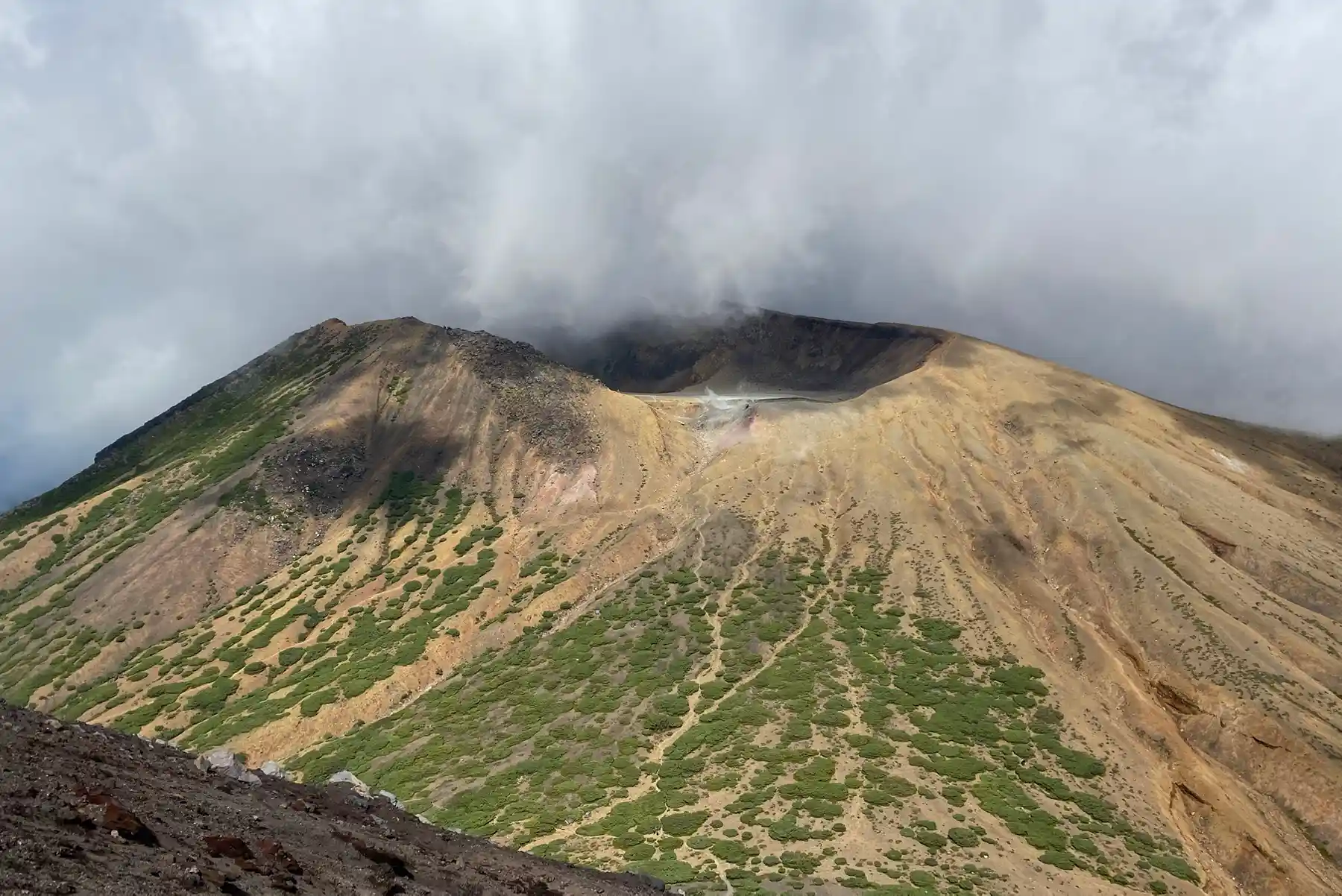
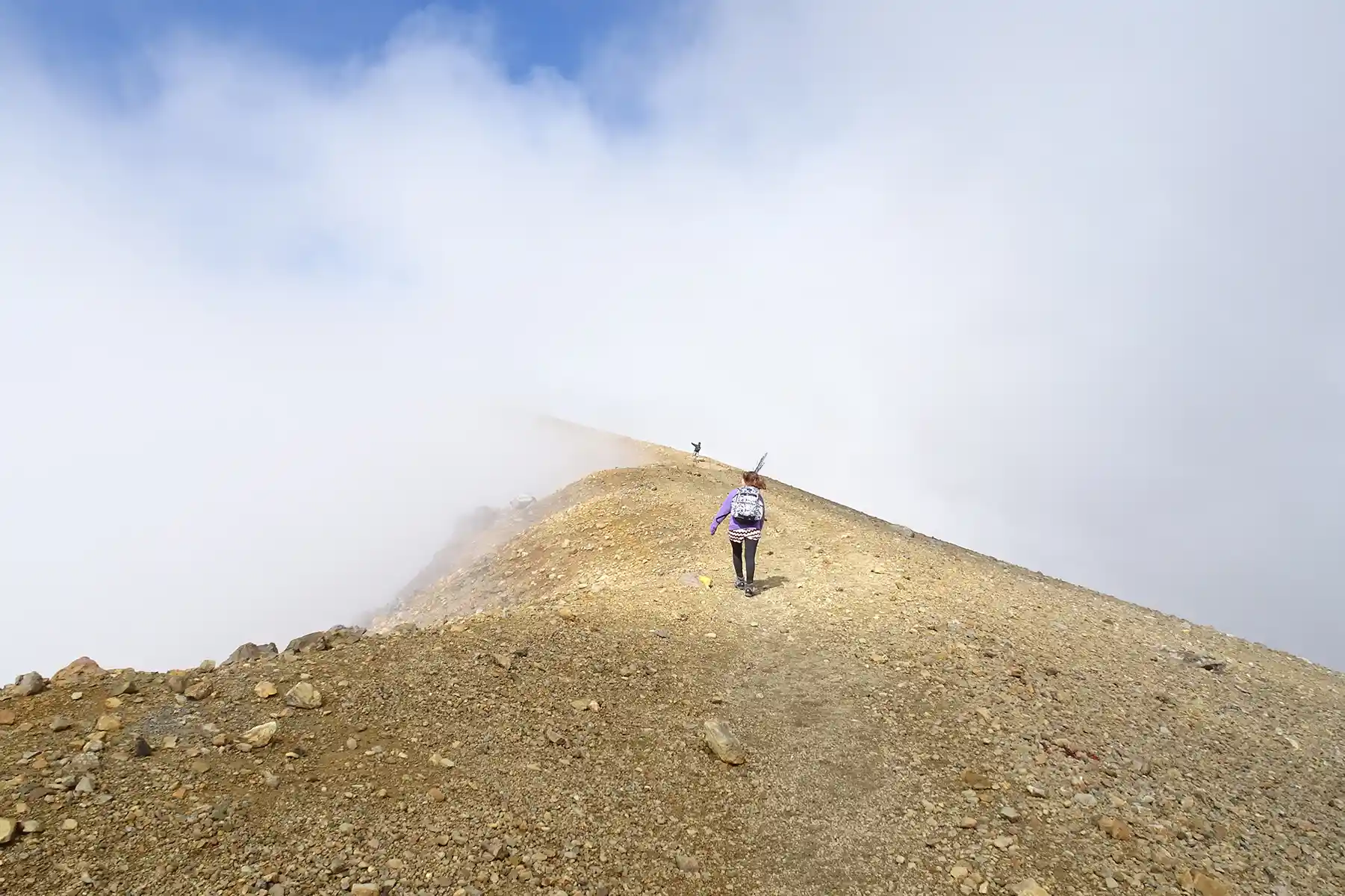
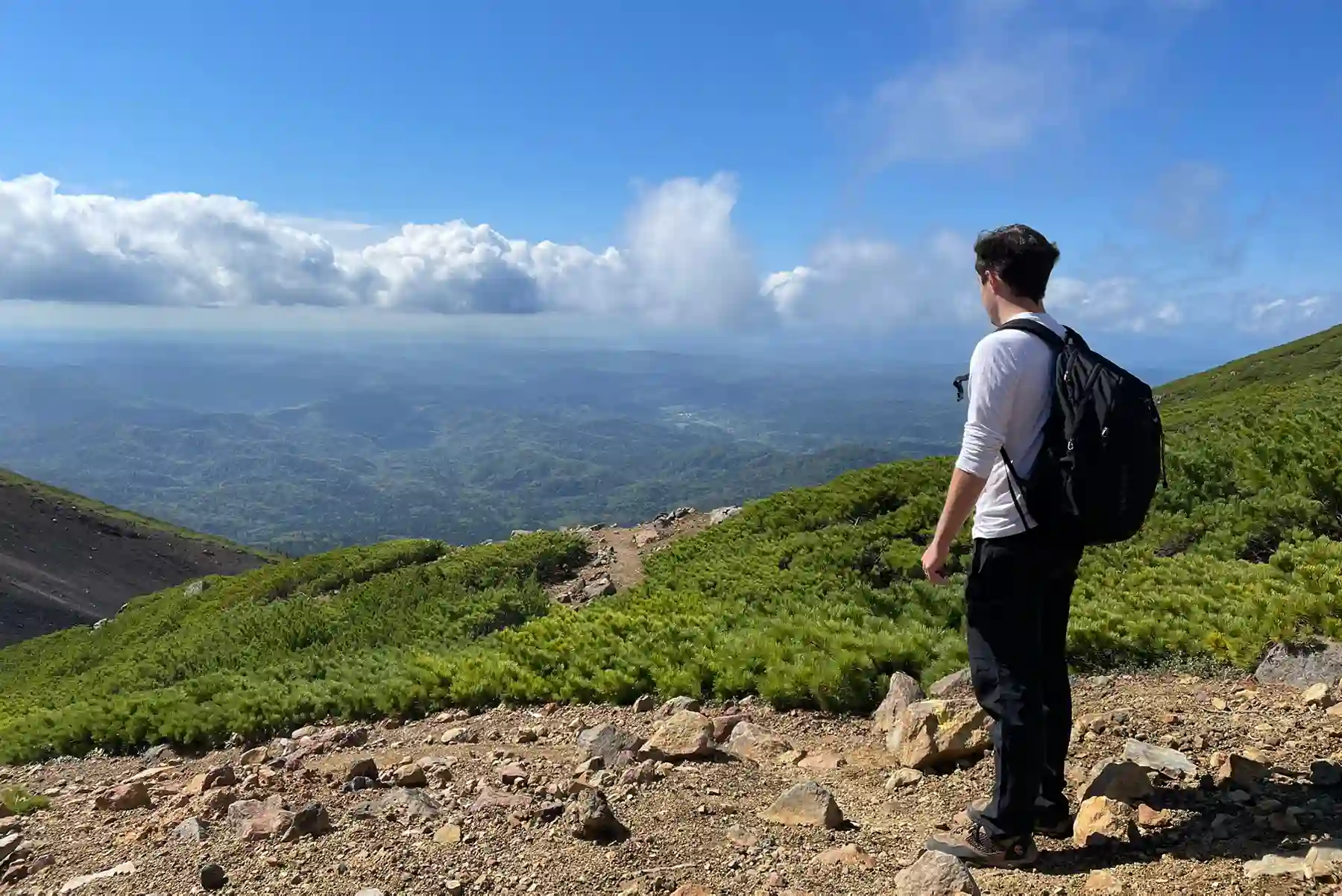
Located in Eastern Hokkaido, Mt. Meakan is a 1,499m high volcano that sits behind Akan Onsen town. It is very active and in 2026 the volcanic activity level was raised to Level 2 (4 is max). Nobody is allowed within 500m of the Ponmachineshiri crater. Check here for current volcanic activity.
The hike up Mt. Meakan has to be one of the most pictureque hikes you can do in Eastern Hokkaido. Starting at Lake Onneto, the hike winds up through forest, then pine bushes until you get to the crater. From there you walk around the rim until the summit. Across from Mt. Meakan sits Akan fuji, another volcanic mountain that only requires a 45-minute climb. The path is soft and tiresome due to the volcanic soil, but the views from atop are spectacular. If you don’t want to climb Akan fuji, you can continue from the summit and go down the North-West side of Mt. Meakan towards Meakan Onsen, and then from there head back to Lake Onneto in a loop.
- Height: 1,499m
- Difficulty: Moderate
- Time: 5.5 hours for loop
- Best season: Summer, Autumn
- Highlights: Crater and fumaroles, views of Lake Akan
- Location: Akan-Mashu National Park (Google Maps)
Want to hike Mt. Meakan with a local guide? – Get in touch here!
Mt. Tokachi
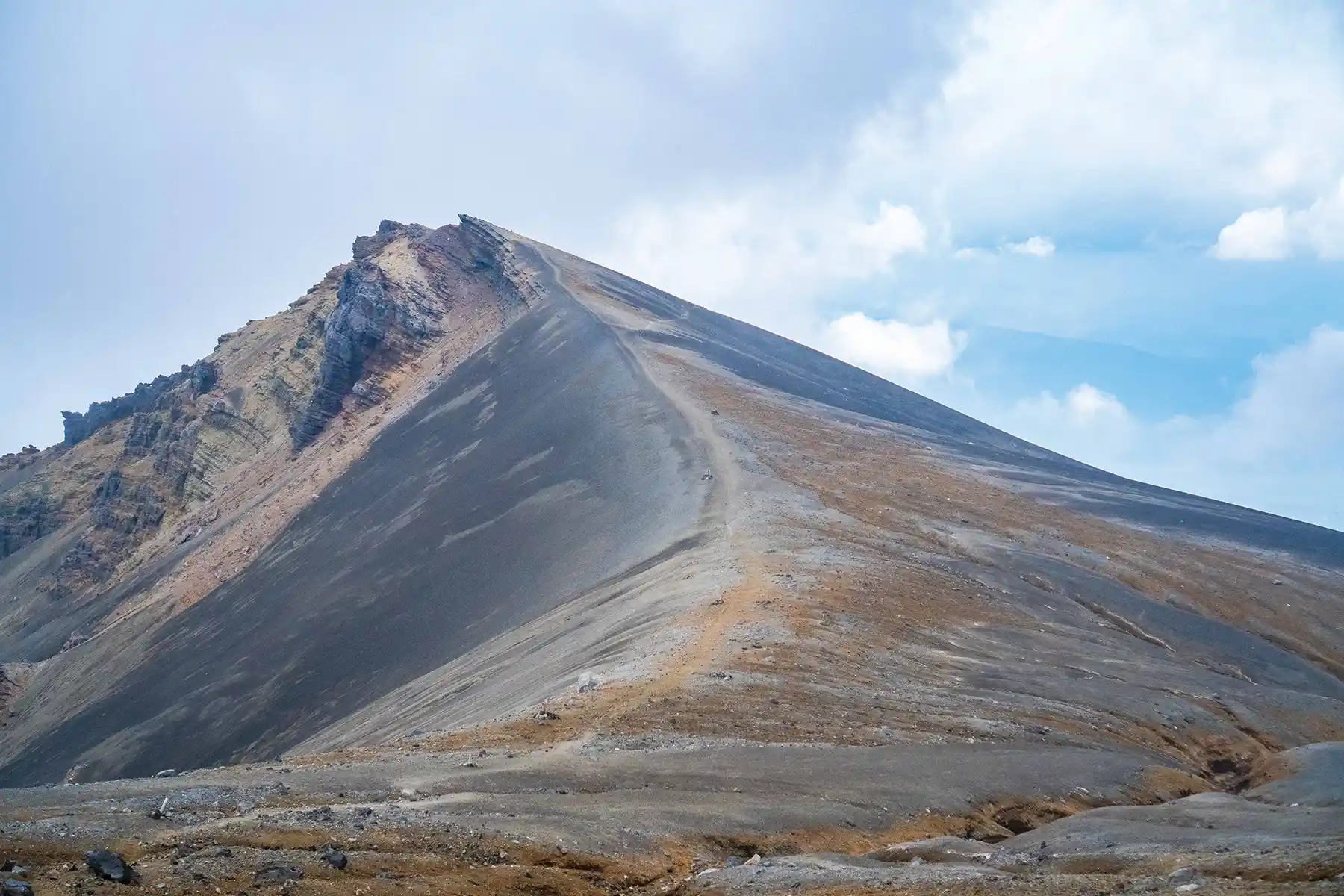
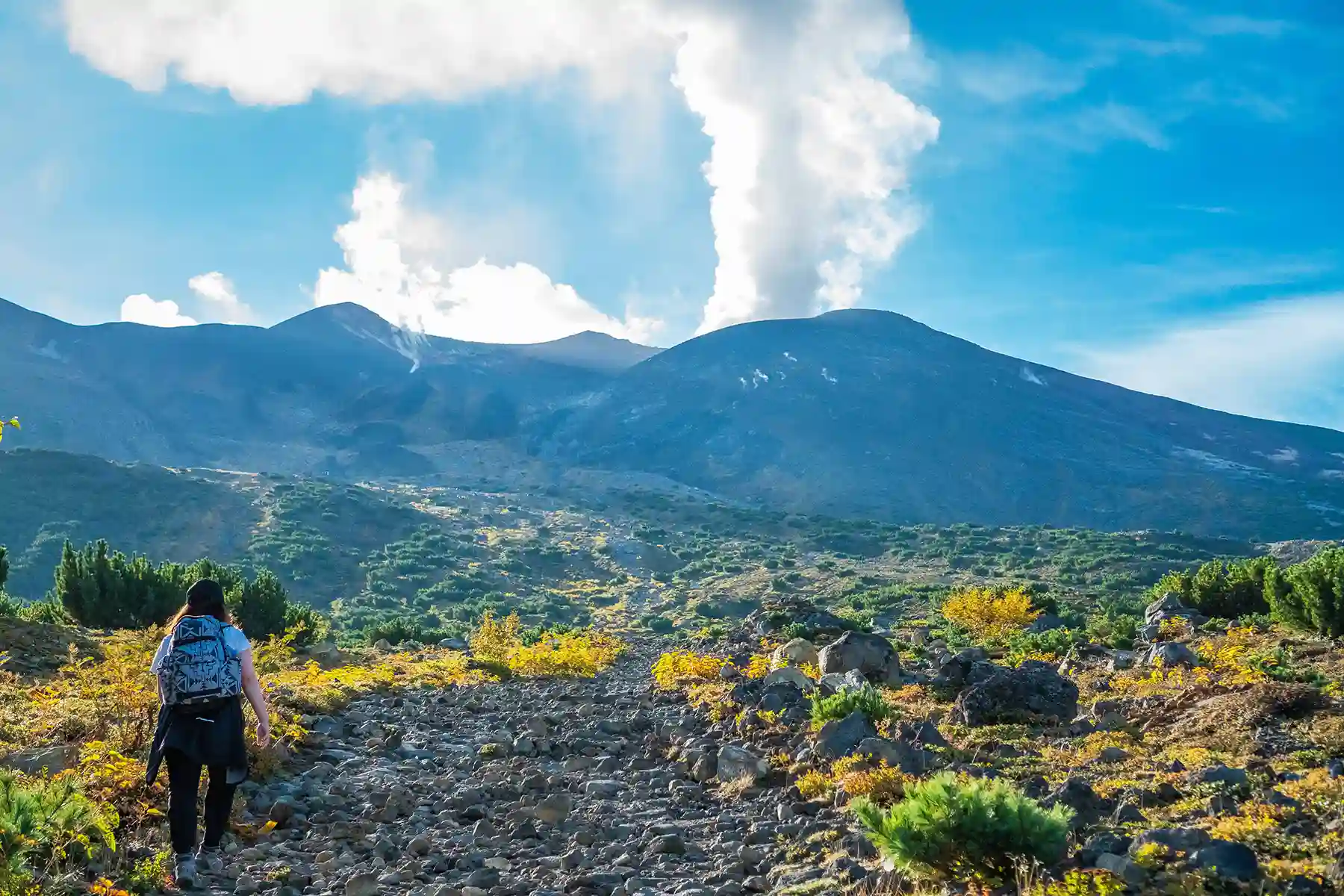
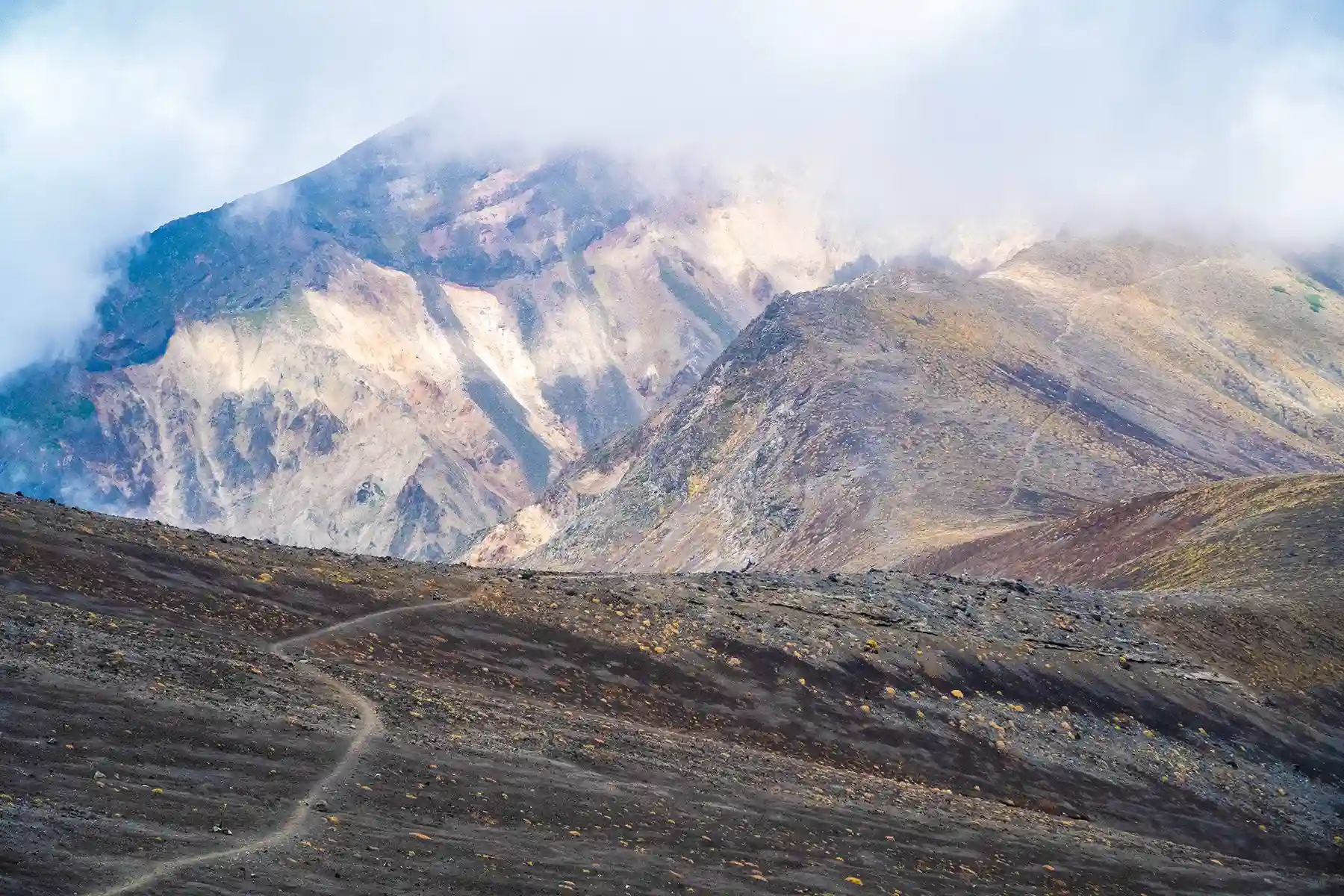
Just like Mt. Meakan (above), Mt. Tokachi is another active volcano that has recently increased in volcanic activity. It is now at Level 2 and you are not allowed within 1.5km of the crater.
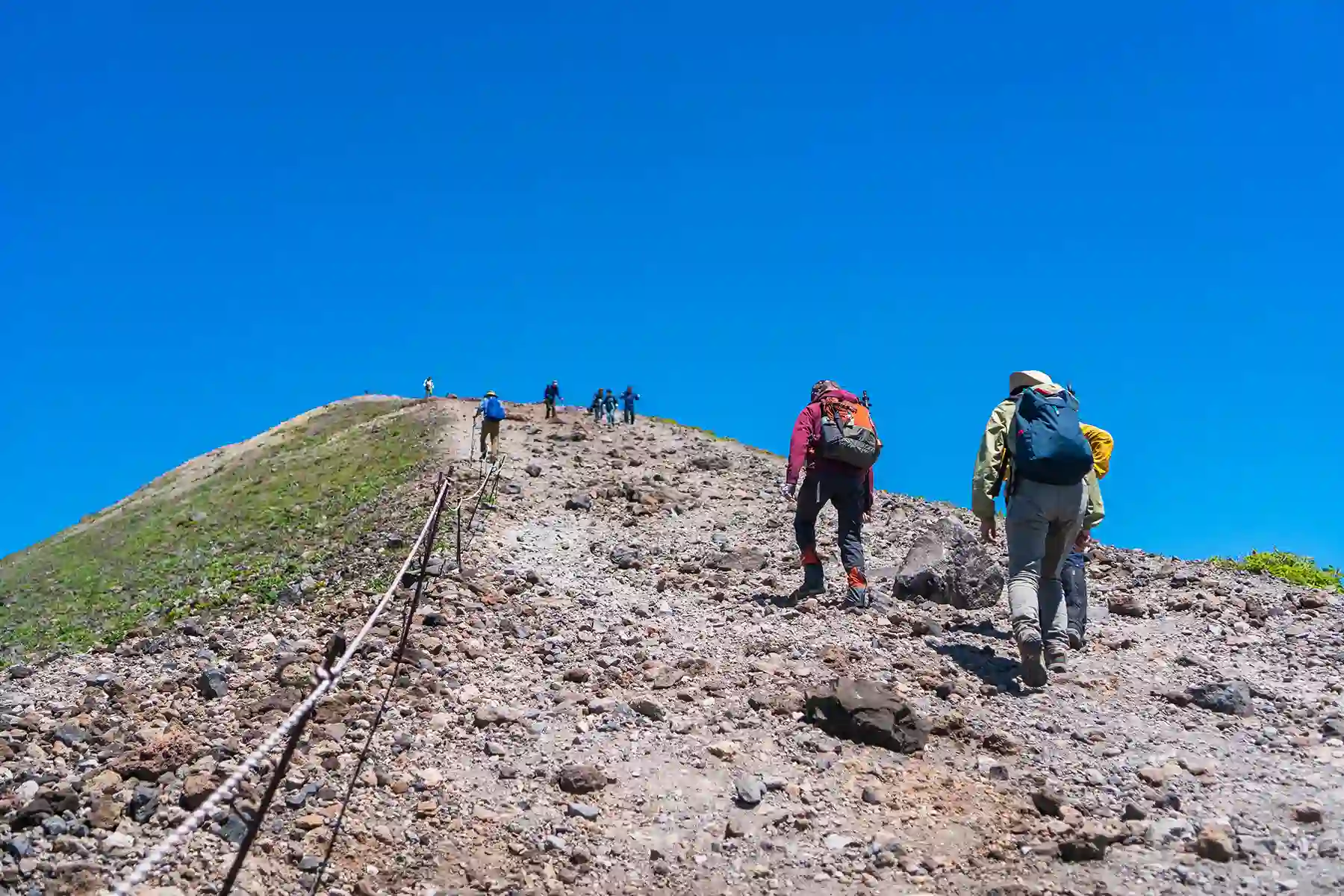
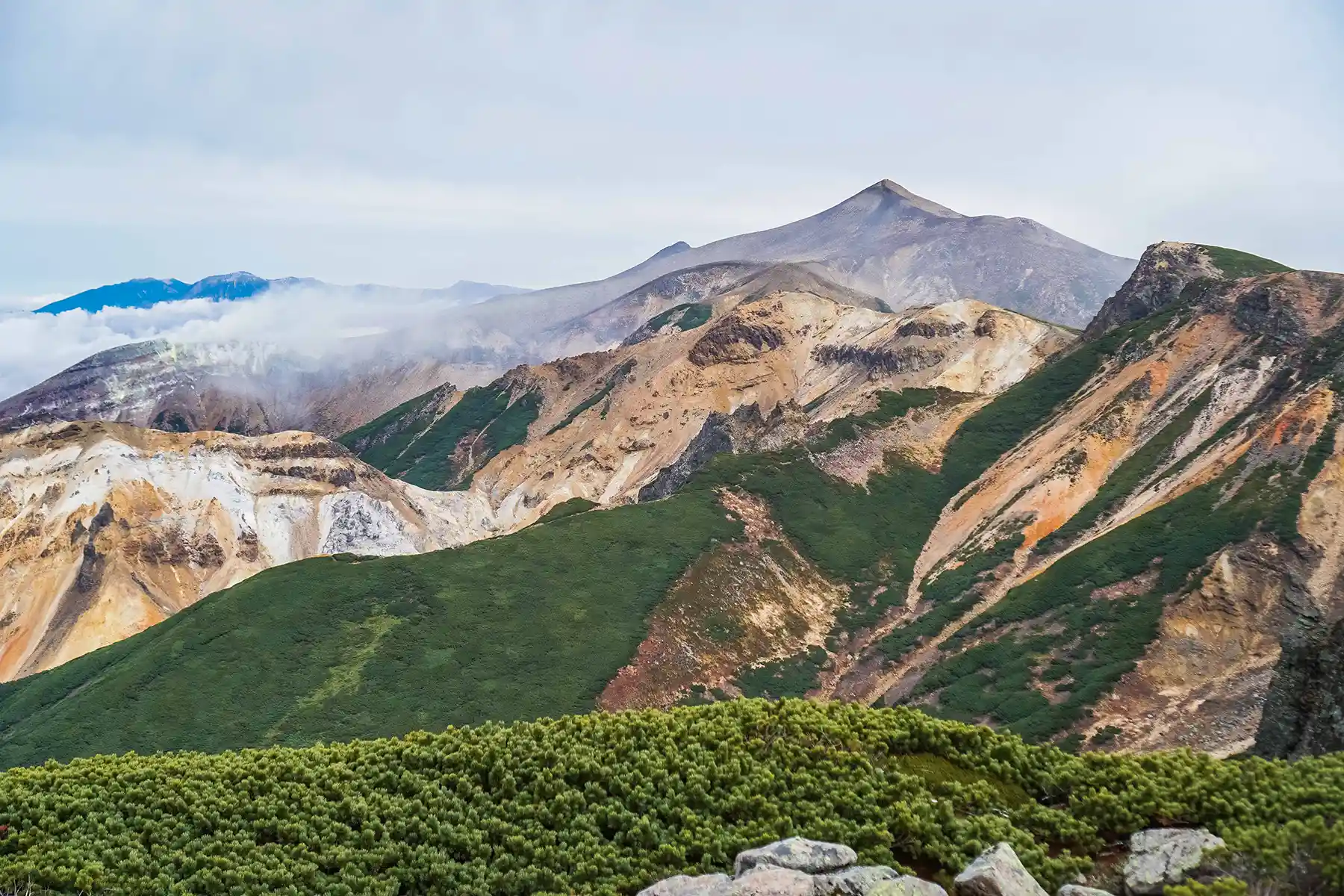
If you get the chance to hike Mt. Tokachi when safe to do so, it is well worth it. The hike is quite demanding due to the rocky terrain and loose gravel but the views of the massive fumaroles really make you feel like you’re in another world. Most people just do the hike to the summit and down, but if you are a keen hiker and want more of a challenge, then the Biei-Tokachi loop is a great choice. Make sure to start early, and take plenty of water with you, as this 10-12 hour hike will make you work hard. The reward is ever-changing terrain, dramatic cliffs and wild animals. Not many places you can see so much change within a 1 days hike.
- Height: 2,077m
- Difficulty: Hard
- Time: 7 hours, 12 hours for Biei-Tokachi loop
- Best season: Summer, Autumn
- Highlights: Volcanic terrain, cliffs and ridges
- Location: Daisetsuzan National Park (Google Maps)
Want to hike Mt. Tokachi with a local guide? – Get in touch here!
Mt. Asahi
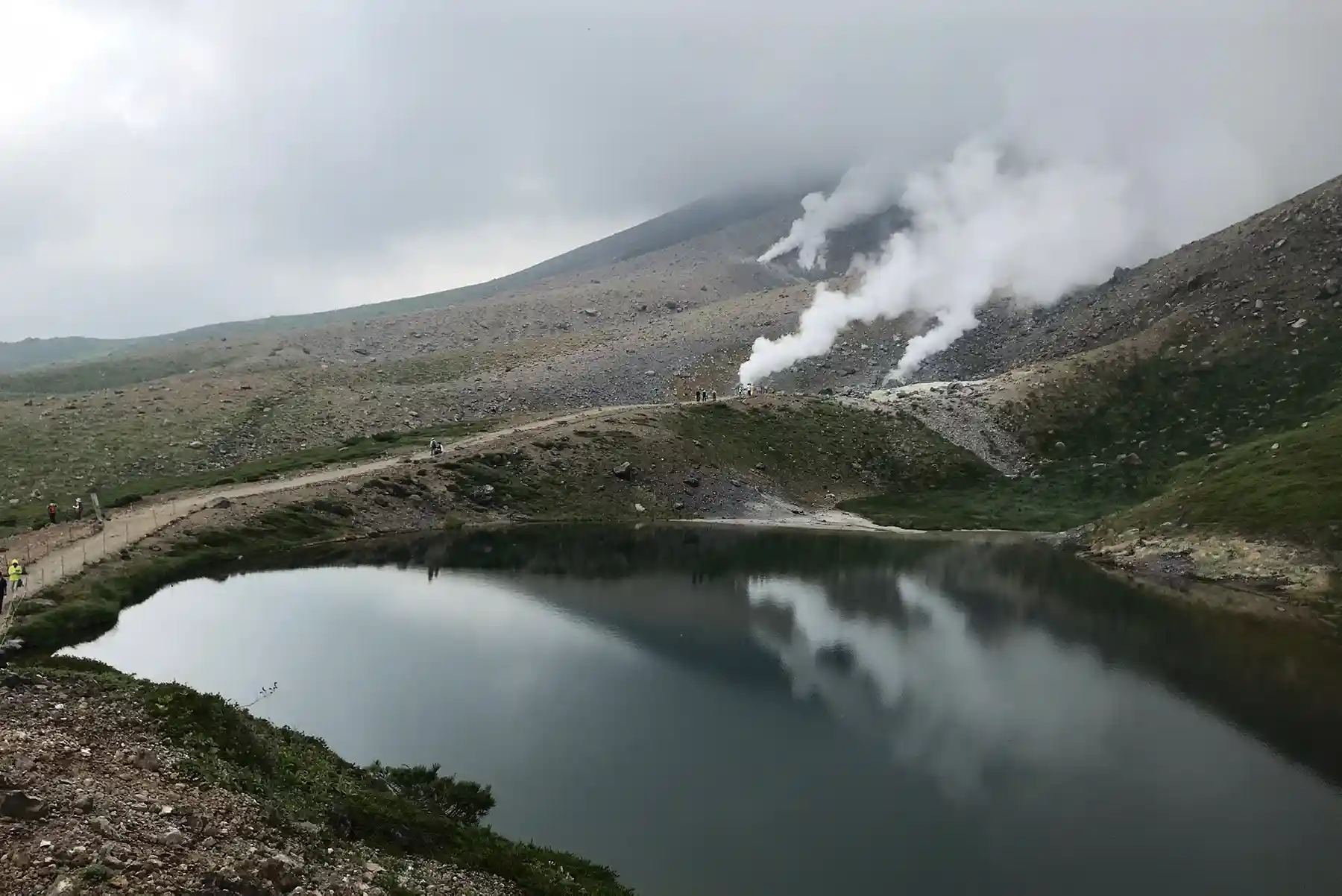
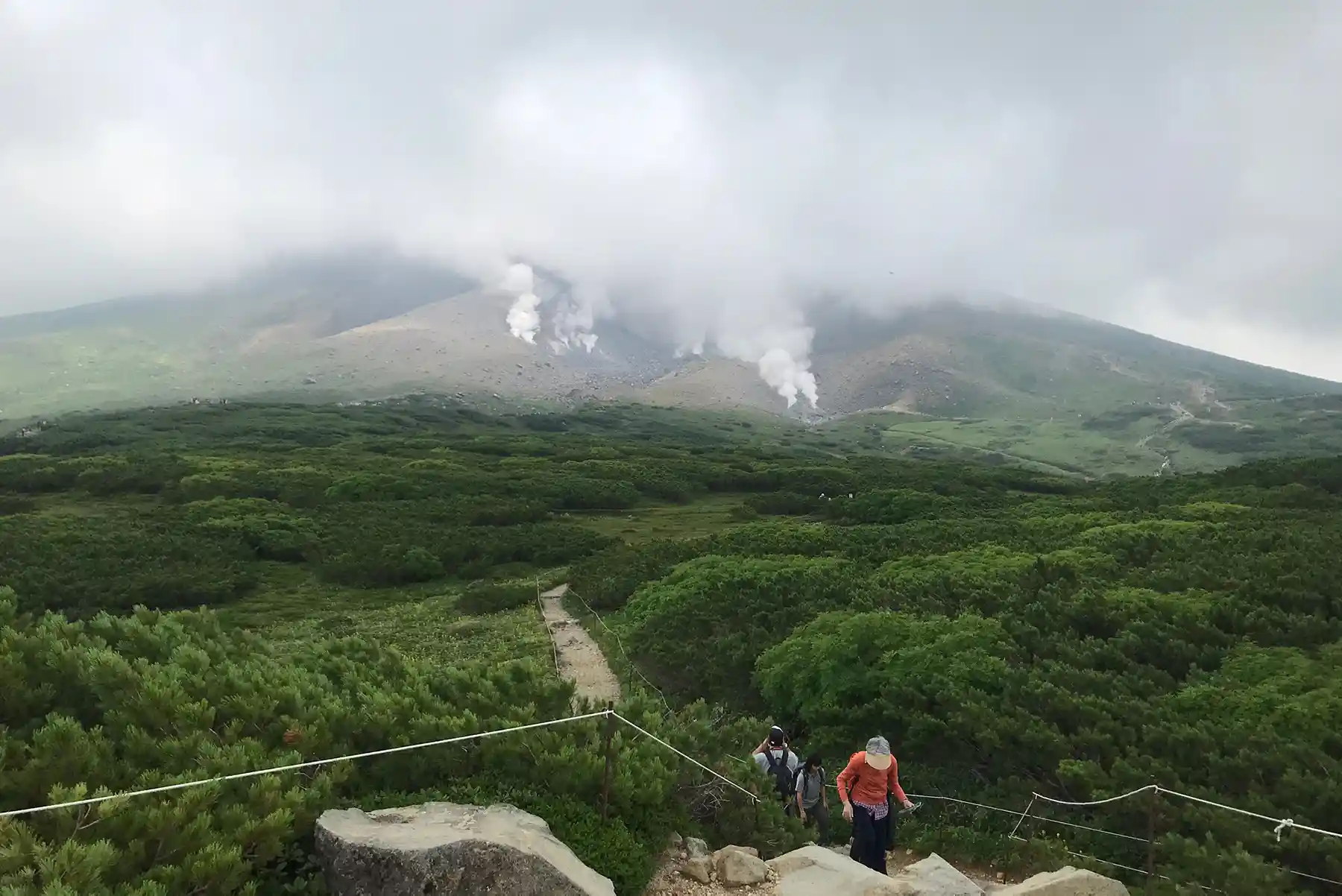
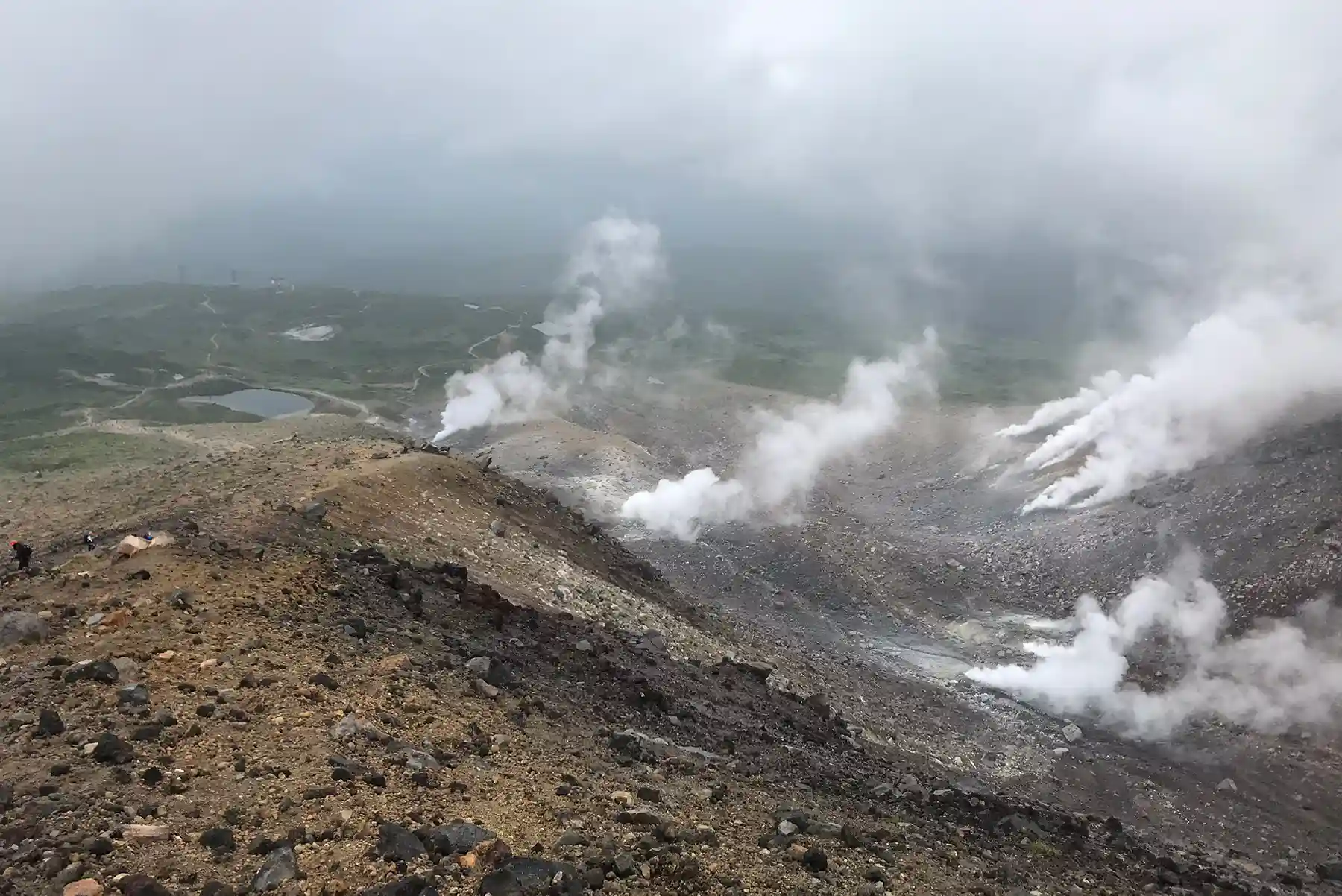
Mt. Asahi is Hokkaido’s highest peak at 2,291m and one of 100 Famous Mountains of Japan. Situated in central Hokkaido in the Daisetsuzan National Park, it is one of the top tourist spots in the area. A ropeway goes up to the 7th station, from where some people just walk around a the fumaroles and ponds or where you can start to hike to the summit.
The trail is to the top is easy to walk apart from loose gravel, but there isn’t anything technical. It is about 1.5 hours to the summit for the average hiker. Make sure to bring proper mountain clothing (e.g rainjacket, hat, spare warm layer etc) as even in summer, it can get cold up there.
- Height: 2,291m
- Difficulty: Moderate
- Time: 5 hours from ropeway to summit and back
- Best season: Summer, Autumn
- Highlights: Highest mountain in Hokkaido, fumaroles, alpine flowers
- Location: Daisetsuzan National Park (Google Maps)
Want to hike Mt. Asahi with a local guide? – Get in touch here!
Which volcano is best?
| Volcano | Difficulty | Time | Best For |
|---|---|---|---|
| Mt. Usu | Easy–Moderate | Half day | First volcano hike |
| Mt. Tarumae | Moderate | Half day | Lava dome |
| Mt. Meakan | Moderate | Full day | Remote scenery |
| Mt. Tokachi | Moderate–Hard | Full day | Experienced hikers |
| Mt. Asahi | Moderate | Full day | Accessibility (ropeway) |
Volcano Hiking Safety
Be prepared before you go:
- Check for volcanic alerts – the JMA (Japan Meteorological Agency) monitors all active volcanoes 24/7. Click here to check.
- Weather – Check weather using Windy.com.
- Proper footwear – Hiking boots are best.
- Stay on trails – Don’t go off the trails towards the fumaroles, these are toxic gases that are fatal when inhaled.
- Bear spray – Brown bears roam all over Hokkaido and bear spray may save your life. A bear bell is also advised if hiking alone.
- Guided hikes – Take a tour with an experienced guide who knows the dangers and where is best to go.
Best Time to Hike Hokkaido's Volcanoes
Spring – Mt. Usu is the only volcano from the list above where you can hike in spring. This is due to its low elevation and being in the warmest area in Hokkaido.
Summer – All volcanoes can be hiked as snow has melted. However, Mt. Asahi will still have snow in areas even in July. Alpine flowers bloom during this time and temperatures are warmest.
Autumn– This is one of the best seasons as temperatures are comfortable for hiking, leaves are changing colours and less busy. That said, a cloudy day can end up being very cold, so make sure to pack accordingly. Mt. Asahi will start to get snow in late autumn.
Winter – Only Mt. Usu is doable in winter if you have microspikes or snowshoes. Snow depth isn’t much so not too difficult. Mt. Asahi and Mt. Tokachi are popular with backcountry skiiers/snowboarders.
What to Bring
Mountain weather is unpredictable so always be prepared for bad weather. Make sure to bring these items:
- Hiking boots
- Waterproof jacket
- Trousers – shorts are comfortable, but if it gets windy, you will wish you had trousers on.
- Snacks (plus extra just in case!)
- Suncream
- Bug spray – mosquitoes and horse flies (Abu) can drive you insane; a bit of spray can make the world of difference.
- Water – always bring as much as you can.
- Warm layer – a thin warm layer even in summer can make the difference between a good or bad hike.
- Bear spray – some tourist information places have rentals.
- Camera – you will want to show your friends back home the unforgettable hikes you’ve done!
Frequently Asked Questions
Can you hike active volcanoes?
Yes, most active volcanoes in Hokkaido are open for hiking. Make sure to check recent volcanic activity to see if there are any restrictions in place. Click here.
Is Mt. Usu safe?
Mt. Usu is currently safe to hike. The JMA (Japan Meterological Angency) monitor seismic activity 24/7.
Which volcano is easiest?
Mt. Usu is the easiest to hike due to its low elevation, well-used path and short distance.
Do I need a guide?
No, you do not need a guide. But a guide can take away the stress or uncertainty of hiking a volcano. Guides are experienced about the trail, history and nature and can provide a fun and enjoyable experience you may not get if hiking alone.
Are volcanoes open year-round?
No, most volcanoes are either inaccessible due to snow or closed roads.
Explore Hokkaido's Volcanoes with Nobo Tours
Nobo Tours provides guided hiking tours up some of Hokkaido’s best volcanoes. Check out our regular volcano hiking tours here:
For other guided volcano hikes mentioned in the article, please contact us via email (nobotoursjp@gmail.com) or send a message via the Whatsapp link at the bottom of the page .